Original research
Why Face Swap Inputs Fail: 5 Degradations Measured
A controlled face-swap input study measuring blur, low resolution, darkness, overexposure and JPEG compression while face detection still succeeds.
Method, measurements and limitations reviewed against the published dataset.

Key takeaways
- The production detector found one face in all six files, including every deliberately degraded version.
- The unchanged control scored 90, while the five degraded inputs scored from 53 to 78 under Readiness Score v1.1.0.
- Gaussian blur reduced normalized face sharpness from 339.4 to 4.8 without causing face detection to fail.
- JPEG quality 5 increased the face-region 8x8 block-boundary ratio from 1.08 to 10.55 while dimensions and global contrast stayed nearly unchanged.
- The overexposed variant clipped 55.9% of sampled highlights, a loss that mean brightness alone understated.
- The complete measurements and transformations are published as versioned JSON for reproduction and citation.
Open data and method
Use the versioned source files to reproduce the table or cite the current measurement boundary.
1. The question: can face detection pass while an input is still weak?
A face-swap upload can pass a detector and still be a poor input. Detection answers a narrow binary question: did the service return a face box? It does not say whether the visible facial detail survived blur, whether highlights were clipped to white, whether a tiny image was enlarged, or whether repeated JPEG saves introduced block artifacts.
Most troubleshooting pages mix several examples and then offer a generic checklist. This experiment changes one property at a time in the same public portrait. That controlled design makes each measurement difference attributable to a documented transformation instead of to a different person, pose, crop or background.
The study does not generate six face swaps and does not claim that a readiness score predicts realism. Its purpose is earlier and more practical: test whether observable preflight measurements can separate an unchanged input from common forms of preventable degradation before credits are spent.
2. Controlled design and the six inspectable files
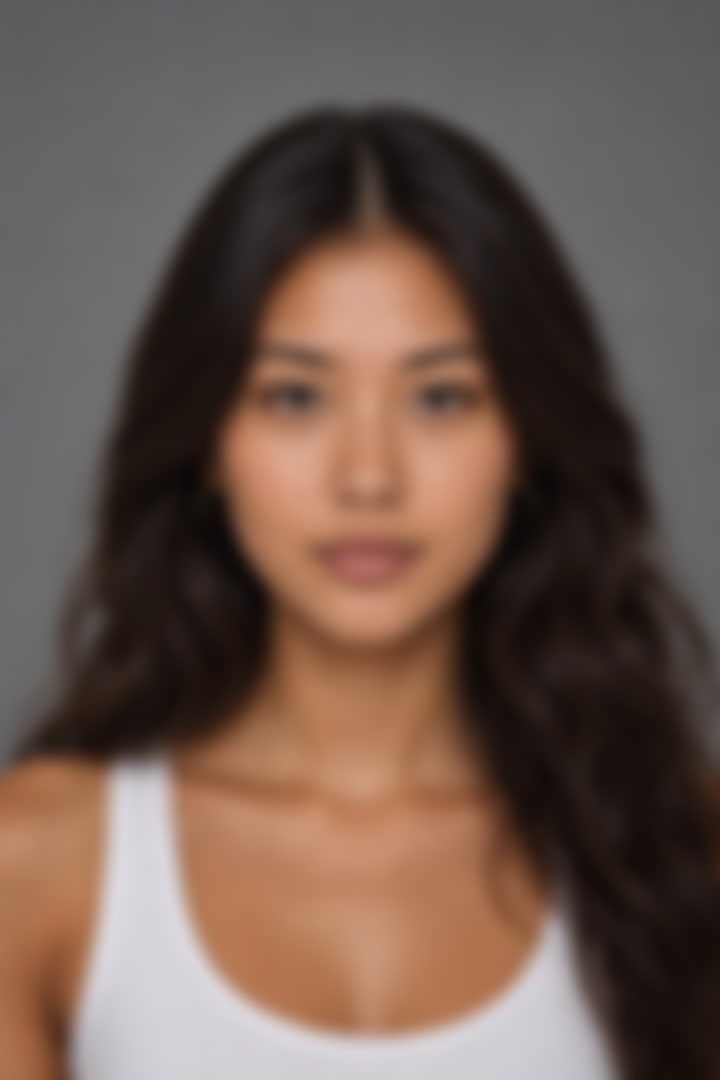
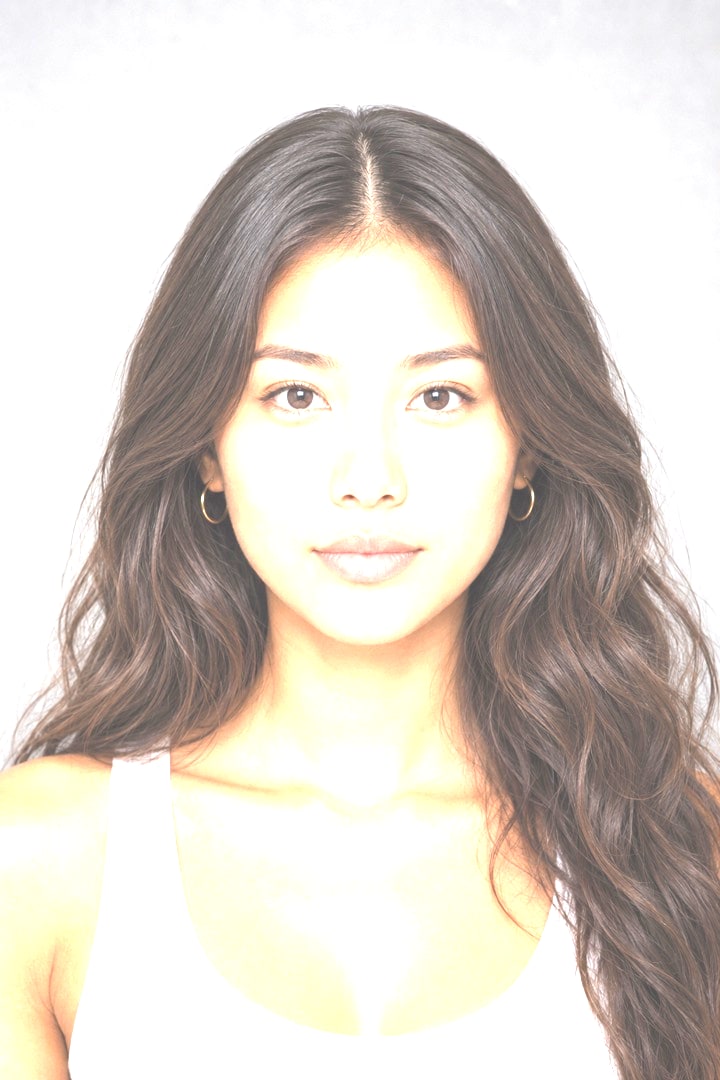
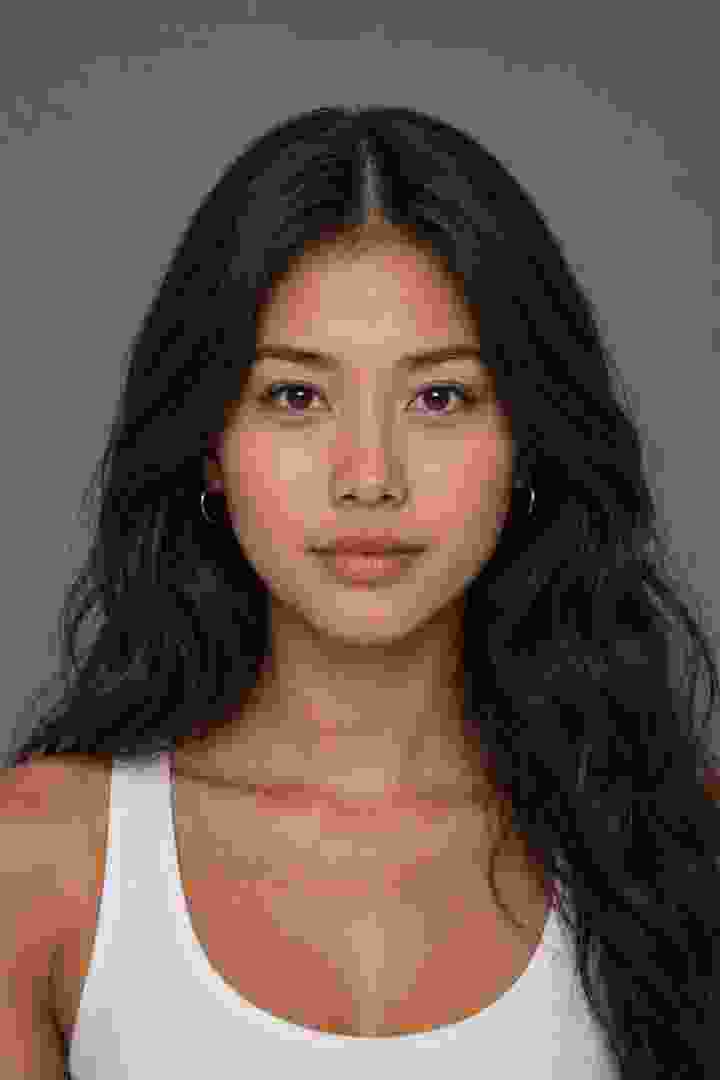
The control is a 720 by 1080 JPEG already published in the FaceSwapAI demo set. Five copies were derived from it: Gaussian blur with sigma 9, a 180-pixel-wide resize, brightness multiplied by 0.32, linear overexposure with gain 1.8 plus offset 80, and JPEG quality 5 with 4:2:0 chroma subsampling. No sample combines two deliberate transformations.
Every file below is the exact public asset measured in the JSON dataset. The visible cards are not screenshots of a report, and the low-resolution file is not replaced with a sharper thumbnail. Open the image in a separate tab if you need to inspect its native pixels.


3. Results: detection stayed at one face while readiness separated
All six files returned one face from the production public detector. That stability is useful for the experiment because it isolates the difference between finding a face and evaluating the pixels around it. The detector boxes remained near the same facial region, scaled proportionally for the 180-pixel image.
Readiness Score v1.1.0 scored each file in the source-image role. The control reached 90. None of the five altered files remained in the ready band: four landed in improve and the low-light image landed in replace. The score is still a heuristic, but it now reacts to the controlled problems that the detector alone cannot describe.
| Input | Size | Light | Clipped | Face sharpness | JPEG blocks | Faces | Score |
|---|---|---|---|---|---|---|---|
| Control | 720 x 1080 | 91.6 | 0.3% | 339.4 | 1.08x | 1 | 90/100 (ready) |
| Gaussian blur | 720 x 1080 | 92.2 | 0% | 4.8 | 1.72x | 1 | 74/100 (improve) |
| Low resolution | 180 x 270 | 91.6 | 0.3% | 74.1 | 1.27x | 1 | 66/100 (improve) |
| Low light | 720 x 1080 | 29.6 | 5.1% | 41.5 | 1.91x | 1 | 53/100 (replace) |
| Overexposed | 720 x 1080 | 209.5 | 55.9% | 678.3 | 1.16x | 1 | 72/100 (improve) |
| Heavy JPEG compression | 720 x 1080 | 92.3 | 0.4% | 311 | 10.55x | 1 | 78/100 (improve) |
4. What each degradation changed
Blur produced the clearest separation. Image dimensions, mean luminance, contrast and face count barely changed, but face-region Laplacian variance fell from 339.4 to 4.8. This is why a full-image edge average was replaced: a smooth background can dominate that average even when the face itself has lost the detail needed for a clean input.
Low resolution reduced the image to 180 by 270 and the detected face box to 73 by 101 pixels. The detector still succeeded, yet the resolution component fell to four points and normalized face sharpness fell to 74.1. A detection badge should therefore never be interpreted as confirmation that a small face contains enough recoverable detail.
Low light moved mean luminance from 91.6 to 29.6 and contrast from 55.3 to 16.2. The 53 score reflects several simultaneous measured consequences of one exposure transformation: less light, flatter luminance variation and weaker edge energy inside the face box.
Overexposure demonstrates why an average is incomplete. Mean luminance rose to 209.5, but the stronger finding is that 55.9% of sampled pixels reached the clipped-highlight boundary. Those pixels have lost tonal differences even though the face-region sharpness calculation remains numerically high around surviving edges.
Heavy JPEG compression left dimensions, brightness and global contrast close to the control. Its aligned block-boundary ratio, however, rose from 1.08 to 10.55. Readiness v1.1 applies a separate block penalty so compression artifacts cannot receive full detail points merely because block edges increase high-frequency energy.
5. A failure-specific repair order
If the short side is below 512 pixels, return to the original camera file before trying an enhancer. Enlarging the already reduced copy changes its dimensions but cannot restore the face pixels removed by the resize. If the source is a screenshot or social-media download, compare it with the camera-roll original before submitting another task.
For blur, inspect the eyes, nose and mouth at 100 percent. Choose another frame or portrait when those edges are visibly soft; sharpening a strongly defocused face can create halos without recovering the missing structure. For JPEG blocks, avoid another save cycle and use the earliest available file.
For low light or clipped highlights, select another exposure when possible. Raising a dark file can reveal noise, while reducing an already white-clipped highlight cannot recreate tonal values that were replaced. Match source and target lighting only after each file is individually usable.
Change one input at a time, then rerun the free checker. That preserves the ability to identify which replacement changed the report and avoids paying for repeated tasks with the same weak pair.
6. What changed in Readiness Score v1.1.0
Version 1.0 measured edge detail across a downscaled whole image. The first public reference-frame benchmark exposed its limitation: smooth scenes could all land in the same lowest detail band. This controlled study made the failure concrete because the unchanged and blurred portraits were not separated reliably by that component.
Version 1.1 uses the bounding boxes already returned by the privacy-limited detector. Each detected face is padded by 12 percent, normalized to 160 by 160 pixels and measured with the variance of a four-neighbor luminance Laplacian. When several target faces are present, the weakest measured face controls the sharpness value.
JPEG inputs receive a second native-scale check around the largest detected face. It compares luminance changes that cross aligned 8 by 8 boundaries with neighboring changes that do not. Lighting now also records the share of pixels at the shadow and highlight clipping boundaries. All thresholds and penalties are published in the same JSON imported by production.
Reports created with v1.0 remain historical. The earlier eight-frame benchmark keeps its v1.0 values and legacy whole-image scoring path; it is not silently recalculated and relabeled as v1.1 evidence.
7. Reproduction boundary and limitations
Global luminance measurements use the same coefficients as the live checker after reducing the longest side to 360 pixels. Face sharpness uses the production detector box plus 12 percent padding and a 160-pixel normalized crop. JPEG blockiness uses a native-scale crop around the largest face, aligned to the original eight-pixel grid. Exact transformations, boxes, metrics and component scores are in the public JSON.
The study uses one portrait and synthetic transformations. It does not represent every camera, skin tone, background, compression encoder or platform pipeline. It also does not test head pose, expression mismatch, occlusion, video motion, temporal stability or current provider behavior.
No generated face-swap output was created or graded, so the data cannot support an accuracy, realism or success-rate claim. The defensible conclusion is narrower: all six files were detectable, while the controlled pixel degradations produced materially different observable readiness measurements.
Ready to apply the checklist to your own permitted media?
Questions this guide answers
Why did every degraded image still pass face detection?
The detector only needed enough structure to return a bounding box. It does not certify resolution, sharpness, exposure or compression quality.
Does a lower readiness score prove that a generated face swap will fail?
No. The score identifies preventable input risks and does not measure final model accuracy, realism or provider behavior.
Why does the JPEG test use an 8x8 boundary ratio?
JPEG processing operates on 8x8 blocks. Comparing aligned boundary changes with nearby non-boundary changes exposes severe block artifacts that ordinary contrast can miss.
Can I reproduce the measurements?
Yes. The public JSON lists every transformation, image path, detector box, measurement formula, component score and limitation.
Were any private user images used?
No. Every sample derives from one portrait already published in the public FaceSwapAI demo and research directories.